Industry 03 / 05
UX design for DevOps tools
delbueno™ Studio designs DevOps tools for engineering teams: pipeline views, deployment dashboards, real-time monitoring, incident views and developer portals. We design for people who live in the terminal, so interfaces stay fast, keyboard friendly and honest about what is happening in production.
Kickoff today. First concepts in 48 hours.
Typical problems
What goes wrong in DevOps.
Status that cannot be trusted at 3 a.m.
During an incident the screen has to say what is broken, who owns it and what to do next. Everything else is noise.
Pipelines and logs with too much detail
Environments, stages and logs pile up fast. Information architecture decides whether an engineer finds the failing step or gives up.
Onboarding that never proves value
A developer tool earns trust in the first session or not at all. The first run has to show a real result quickly.
Users who prefer the command line
The interface should reinforce the CLI, not fight it: consistent names, keyboard paths and links that round-trip between the two.
What we design
The screens that carry the weight.
- 01Pipeline and deployment views
- 02Incident and on-call dashboards
- 03Log and trace explorers
- 04Developer portals
Related work
Work behind this page.
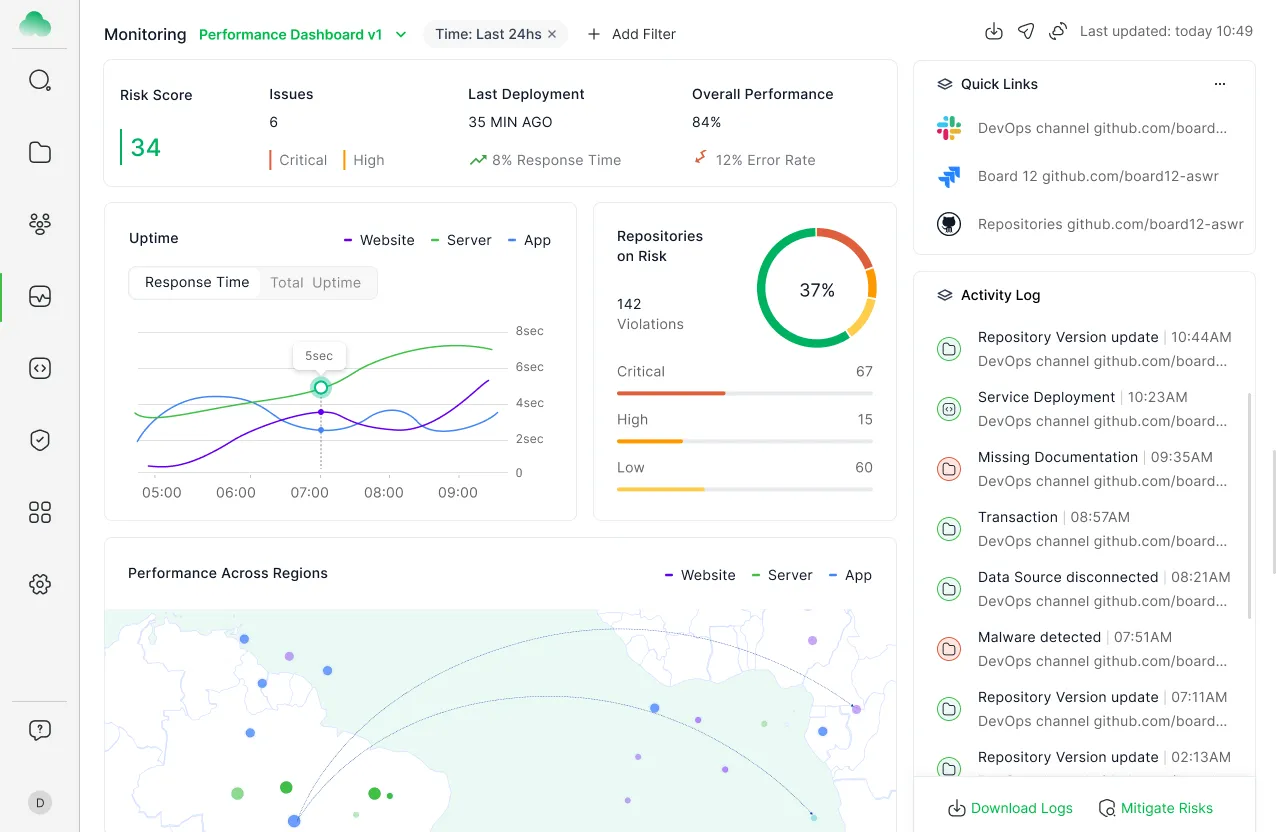
We have not published a DevOps-specific case study yet. CloudGuardia is the closest: a repository manager, alerts, performance charts and an activity log.
From the journal
Go deeper.
Frequently asked questions
Do you design for developers who prefer the CLI?
Yes. We keep the interface keyboard friendly and consistent with the command line, so the two reinforce each other.
What do you design for DevOps teams?
Real-time monitoring dashboards, deployment views, cost tracking and system health, with the aim of reducing cognitive load and raising team velocity.
Can you test with engineers?
Yes. We recruit target-role testers such as tech leads, cloud admins and developers, and run rapid sessions that surface friction in minutes.
Other industries
Also in our field.
Cloud
Interfaces for cloud platforms, cost tools and infrastructure consoles.
Cybersecurity
Interfaces for security operations, posture management and threat response.
AI
Interfaces for AI agents, copilots and explainable machine learning.
Fintech
Interfaces for payments, banking, investing and financial operations.
Next